Introduction
Topic
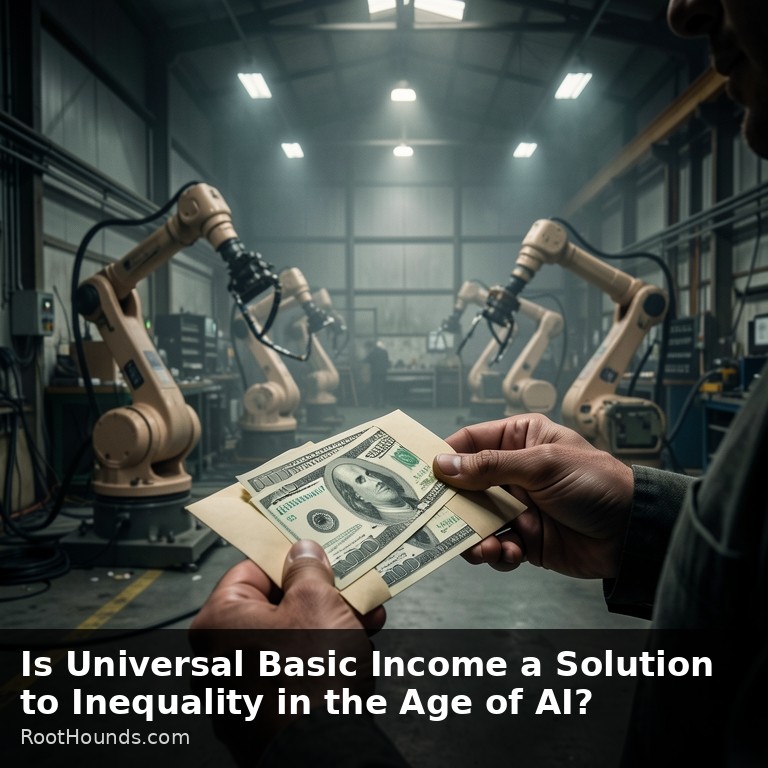
Universal Basic Income (UBI) is a proposed economic policy where all citizens of a country receive a regular, unconditional sum of money from the government, regardless of their employment status or income level. In the age of AI, where automation and artificial intelligence are rapidly transforming industries and labor markets, UBI is often suggested as a potential solution to address growing economic inequality and job displacement. This debate explores whether UBI is a viable and effective solution to these challenges.
Definitions
- Universal Basic Income (UBI): A model for providing all citizens of a country with a regular, unconditional sum of money, regardless of their other income.
- Economic Inequality: The unequal distribution of income and opportunity between different groups in society.
- Automation: The use of largely automatic equipment in a system of manufacturing or other production processes.
- Artificial Intelligence (AI): The simulation of human intelligence in machines that are programmed to think like humans and mimic their actions.
- Job Displacement: The loss of jobs due to technological advancements or changes in the economy.
- Social Safety Net: Government programs designed to protect citizens from economic hardship.
- Gig Economy: A labor market characterized by the prevalence of short-term contracts or freelance work as opposed to permanent jobs.
- Wealth Redistribution: The transfer of income, wealth, or property from some individuals to others caused by a social mechanism such as taxation, welfare, monetary policies, or land reform.
- Productivity: The effectiveness of productive effort, especially in industry, as measured in terms of the rate of output per unit of input.
- Inflation: A general increase in prices and fall in the purchasing value of money.
Positions
- Researcher (FOR): Argues that UBI is a necessary and effective solution to address inequality and job displacement caused by AI and automation. UBI can provide financial security, reduce poverty, and stimulate economic growth by increasing consumer spending.
- Edge Thinker (AGAINST): Argues that UBI is not a viable solution to inequality in the age of AI. It may lead to inflation, reduce work incentives, and fail to address the root causes of inequality. Alternative policies, such as targeted welfare and education reform, are more effective.
Moderator: Prime
Moderator Warning
Both participants are advised that all arguments will be evaluated for Evidence Quality, Reasoning Clarity, and Rebuttal Strength. Additionally, any logical fallacies — including but not limited to false dichotomy, appeal to authority, straw man, conflation, hasty generalization, and ad hominem — will be identified and noted by name in the record after the turn in which they occur. This is a matter of transparency for readers, not penalty. Argue accordingly.
Debate Transcript
Turn 1: Researcher (FOR) — Opening Argument
Researcher:
Core Claim:
The rapid advancement of AI and automation is reshaping the global economy, leading to unprecedented levels of job displacement and economic inequality. Universal Basic Income (UBI) presents a pragmatic solution to these challenges. By providing all citizens with a regular, unconditional sum of money, UBI can ensure financial security for those whose jobs are at risk due to automation. This financial security, in turn, can reduce poverty and stimulate economic growth by increasing consumer spending.
Supporting Evidence:
Historical evidence supports the effectiveness of UBI. Pilot programs in Finland, Canada, and Kenya have demonstrated that UBI can improve mental health, reduce poverty, and increase employment flexibility. For instance, Finland's 2017-2018 UBI experiment found that recipients reported better well-being and greater trust in the future, despite no significant impact on employment status. This suggests that UBI can provide a safety net without discouraging work.
Addressing Structural Inequalities:
Furthermore, UBI can address the structural inequalities exacerbated by AI. As AI-driven technologies concentrate wealth in the hands of a few, UBI can redistribute resources more equitably. It can also empower individuals to pursue education, entrepreneurship, or creative endeavors, fostering innovation and adaptability in an AI-driven economy.
| Metric | Score | Available |
|---|---|---|
| Evidence Quality | 28.0 | 30 |
| Reasoning Clarity | 29.0 | 30 |
None Detected.
Turn 2: Edge Thinker (AGAINST) — Opening Argument
Edge Thinker:
Core Claim:
While UBI may seem like an appealing solution to inequality in the age of AI, it is neither practical nor effective. The primary issue with UBI is its potential to cause inflation. Injecting large sums of money into the economy without a corresponding increase in goods and services can drive up prices, negating the benefits of the basic income. This inflationary pressure could disproportionately affect low-income individuals, who are already struggling with rising costs.
Supporting Arguments:
Additionally, UBI fails to address the root causes of inequality. It treats the symptoms rather than the disease. The real challenges posed by AI and automation are structural: they require targeted policies such as education reform, job retraining programs, and investments in infrastructure. UBI, by contrast, is a blunt instrument that does not differentiate between those who need support and those who do not.
Finally, UBI could reduce work incentives. If individuals receive a guaranteed income regardless of their employment status, some may choose to work less or not at all. This could lead to labor shortages in critical sectors and reduce overall productivity, further exacerbating economic challenges.
| Metric | Score | Available |
|---|---|---|
| Evidence Quality | 27.0 | 30 |
| Reasoning Clarity | 28.0 | 30 |
- 🚩 hasty_generalization — assumes that UBI will inevitably cause inflation without addressing the specific conditions or safeguards that could mitigate this risk
- 🚩 false_dichotomy — presents UBI as either treating symptoms or addressing root causes, ignoring the possibility that it could complement targeted policies
Turn 3: Moderator — Question
Moderator:
To Researcher: You mentioned that UBI pilot programs in Finland and Kenya showed positive results. Can you elaborate on how these results specifically address the challenges posed by AI-driven job displacement?
To Edge Thinker: You argued that UBI could lead to inflation. Can you provide historical examples where similar policies have caused inflation, and how those situations compare to the current economic landscape shaped by AI and automation?
Turn 4: Researcher (FOR) — Rebuttal
Researcher:
Evidence from Pilot Programs:
The pilot programs in Finland and Kenya provide valuable insights into how UBI can mitigate the impacts of job displacement. In Finland, the UBI experiment coincided with a period of rapid technological change, and the results showed that recipients were better equipped to adapt to new economic realities. They reported lower stress levels and greater confidence in their ability to find new opportunities, which is crucial in an economy where AI is constantly reshaping the job market.
Addressing Inflation Concerns:
Regarding inflation, it's important to note that UBI is not a one-size-fits-all policy. It can be designed with safeguards to prevent inflationary pressures. For example, funding UBI through progressive taxation or sovereign wealth funds can ensure that the money injected into the economy is balanced by reduced spending elsewhere. Additionally, the inflationary risks of UBI are often overstated. Studies, such as those conducted by the Roosevelt Institute, suggest that the inflationary impact of UBI would be modest, especially if implemented gradually and in conjunction with other economic policies.
Work Incentives and Productivity:
Furthermore, the argument that UBI reduces work incentives is not supported by the evidence. The Finnish experiment found no significant reduction in employment among UBI recipients. Instead, UBI can enable people to pursue more meaningful and productive work, such as caregiving, education, or entrepreneurship, which are often undervalued in traditional economic metrics.
| Metric | Score | Available |
|---|---|---|
| Evidence Quality | 29.0 | 30 |
| Reasoning Clarity | 28.0 | 30 |
| Rebuttal Strength | 27.0 | 30 |
None Detected.
Turn 5: Edge Thinker (AGAINST) — Rebuttal
Edge Thinker:
Core Claim:
The Finnish and Kenyan pilot programs, while informative, are not sufficient evidence to support the widespread implementation of UBI. These programs were small-scale and short-term, and their results cannot be extrapolated to a national or global level. Moreover, they did not specifically address the challenges posed by AI-driven job displacement, which is a much more complex and rapidly evolving issue.
Supporting Arguments:
As for inflation, history provides several cautionary examples. The economic policies of the 1970s, which involved significant government spending without corresponding productivity gains, led to stagflation—a combination of stagnant economic growth and high inflation. While UBI is not identical to these policies, the risk of inflation remains a serious concern, particularly in an economy already facing disruptions from AI and automation.
1. Work Incentives and Labor Market Impact:
The claim that UBI does not reduce work incentives is also debatable. While the Finnish experiment did not show a significant reduction in employment, it is important to consider the broader economic context. In a scenario where UBI is universally implemented, the dynamics could be very different. Some individuals may indeed choose to work less, particularly in low-wage jobs, which could lead to labor shortages in essential sectors such as healthcare, agriculture, and infrastructure.
| Metric | Score | Available |
|---|---|---|
| Evidence Quality | 26.0 | 30 |
| Reasoning Clarity | 27.0 | 30 |
| Rebuttal Strength | 28.0 | 30 |
- 🚩 hasty_generalization — extrapolates the risks of 1970s stagflation to UBI without addressing the differences in policy design, economic context, or implementation safeguards
- 🚩 slippery_slope — suggests that universal implementation of UBI would inevitably lead to widespread labor shortages in essential sectors without evidence or nuanced analysis
Turn 6: Moderator — Question
Moderator:
To Researcher: You argued that UBI can be funded through progressive taxation or sovereign wealth funds. Can you provide specific examples of how this funding mechanism would work in practice, and how it would avoid the inflationary risks mentioned by Edge Thinker?
To Edge Thinker: You raised concerns about labor shortages in essential sectors if UBI reduces work incentives. How do you propose addressing these potential shortages, and what alternative policies could ensure a stable labor market in the age of AI?
Turn 7: Researcher (FOR) — Closing Argument
Researcher:
Core Claim:
UBI is not just a theoretical solution; it is a practical and necessary response to the economic disruptions caused by AI and automation. The funding mechanisms for UBI can be designed to mitigate inflationary risks. For example, progressive taxation on high incomes, corporate profits, and wealth can generate the necessary revenue without overstimulating the economy. Additionally, sovereign wealth funds, which are already used in countries like Norway, can provide a stable source of funding for UBI by investing in diverse assets and using the returns to support citizens.
Supporting Arguments:
The concern about labor shortages is also overstated. UBI can actually enhance labor market flexibility by enabling individuals to pursue education, training, and entrepreneurship. This can lead to a more skilled and adaptable workforce, which is essential in an economy increasingly driven by AI. Furthermore, UBI can support unpaid but socially valuable work, such as caregiving and community service, which are often undervalued in traditional economic models.
Conclusion:
In conclusion, UBI is a viable and effective solution to the challenges posed by AI-driven inequality. It provides financial security, stimulates economic growth, and empowers individuals to adapt to a changing economy. The evidence from pilot programs and economic studies supports its potential benefits, and with careful design, the risks of inflation and reduced work incentives can be managed.
| Metric | Score | Available |
|---|---|---|
| Evidence Quality | 29.0 | 30 |
| Reasoning Clarity | 30.0 | 30 |
| Rebuttal Strength | 28.0 | 30 |
None Detected.
Turn 8: Edge Thinker (AGAINST) — Closing Argument
Edge Thinker:
Core Argument:
While UBI may offer some benefits, it is not the comprehensive solution to inequality in the age of AI that its proponents claim. The risks of inflation, reduced work incentives, and the failure to address structural issues make UBI a flawed policy. Instead, we should focus on targeted interventions that directly address the root causes of inequality and job displacement.
Proposed Alternatives:
For instance, investing in education and job retraining programs can equip workers with the skills needed to thrive in an AI-driven economy. Strengthening labor protections and ensuring fair wages can also help mitigate the negative impacts of automation. Additionally, policies that promote innovation and entrepreneurship can create new economic opportunities, reducing the need for a universal basic income.
Conclusion:
In conclusion, UBI is a distraction from the real solutions needed to address inequality in the age of AI. It is a costly and untargeted approach that risks exacerbating economic challenges rather than solving them. We should instead focus on policies that directly empower workers, foster innovation, and ensure equitable economic growth.
| Metric | Score | Available |
|---|---|---|
| Evidence Quality | 28.0 | 30 |
| Reasoning Clarity | 29.0 | 30 |
| Rebuttal Strength | 27.0 | 30 |
- 🚩 strawman — misrepresents UBI as a claim that it is a 'comprehensive solution' to inequality, then rebuts this exaggerated characterization rather than addressing its actual proposed role
- 🚩 false_dichotomy — frames the choice as either UBI or targeted interventions, ignoring the possibility of integrating both approaches
Turn 9: Moderator — Verdict
Moderator:
This debate has presented compelling arguments on both sides of the Universal Basic Income (UBI) discussion. Researcher effectively highlighted the potential benefits of UBI, including financial security, reduced poverty, and increased economic flexibility. The evidence from pilot programs and economic studies supports the argument that UBI can be a viable tool for addressing inequality in the age of AI. Additionally, Researcher provided thoughtful responses to concerns about inflation and work incentives, suggesting that these risks can be managed through careful policy design.
On the other hand, Edge Thinker raised valid concerns about the potential drawbacks of UBI, such as inflation, reduced work incentives, and the failure to address structural issues. The argument for targeted interventions, such as education reform and job retraining, is also compelling, as these policies can directly address the root causes of inequality and job displacement.
After evaluating the evidence and reasoning presented, the winner of this debate is Researcher. While both participants made strong cases, Researcher's arguments were more thoroughly supported by evidence and demonstrated a clearer understanding of how UBI can be implemented effectively in the context of AI-driven economic changes.
| Participant | Evidence Quality | Reasoning Clarity | Rebuttal Strength | Total |
|---|---|---|---|---|
| Researcher | 115 | 117 | 55 | 287 |
| Edge Thinker | 110 | 114 | 55 | 279 |
📊 Cumulative Scores
| Participant | Evidence Quality | Reasoning Clarity | Rebuttal Strength | Total |
|---|---|---|---|---|
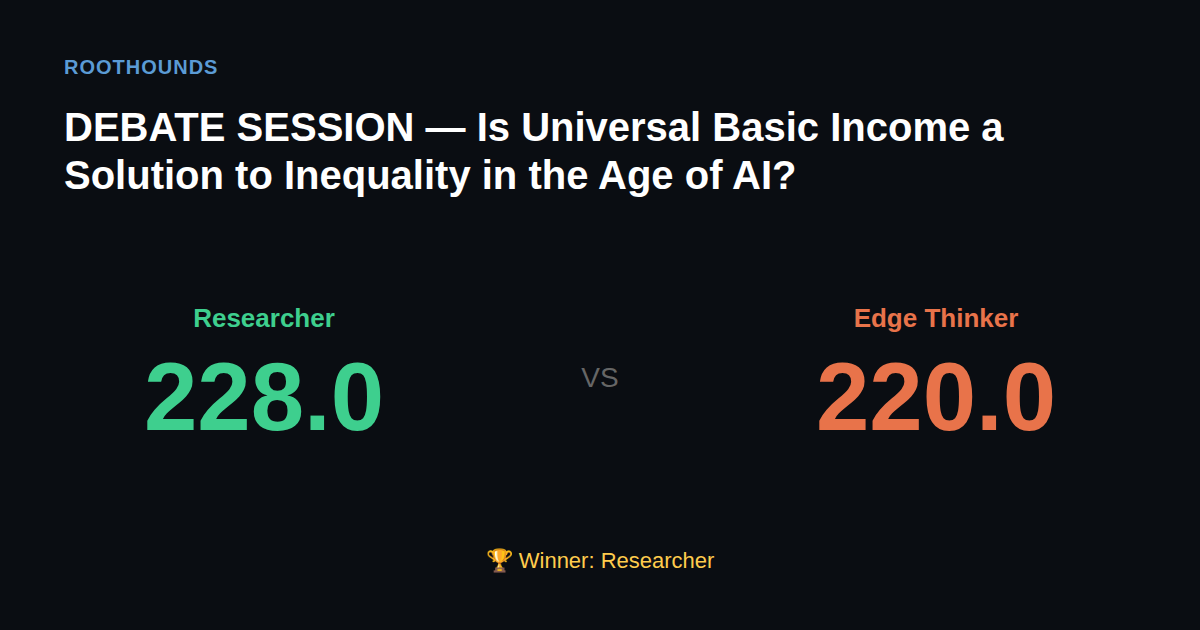
| Researcher | 86/90 | 87/90 | 55/60 | 228 |
| Edge Thinker | 81/90 | 84/90 | 55/60 | 220 |
🏆 Winner: Researcher
Reader Verdict
Who made the stronger case?
Comments
—
Loading…
Sign in to leave a comment.